
The role of motor imagery in word learning
The IM-APP project focuses on the impact of kinesthetic motor imagery (KMI) on learning new words. Rooted in embodied cognition theory, it posits that language comprehension and memorization are closely tied to sensorimotor experiences. KMI, which involves imagining oneself performing a movement while focusing on the associated sensations, is already used in motor rehabilitation and could also promote vocabulary acquisition. Recent studies have shown that associating a mental action with a word improves memory retention and semantic comprehension. The mechanisms involved in this strategy are thought to be related to motor simulation mechanisms, which suggest that modal mental simulation occurs when accessing concepts. Reinforcing these links could lead to better consolidation of learning, particularly in the context of word acquisition. However, these approaches need to be tested within a rigorous experimental framework and applied to concrete educational contexts. This project is based on three research operations. First, it will evaluate the effect of KMI training on learning new words by comparing participants who practice KMI with a control group. This method will then be tested on learners of French as a second language (L2), in collaboration with the Centre Universitaire d'Études Françaises (CUEF) in Grenoble, to assess its relevance for language teaching. At the same time, a psycholinguistic database will be created to catalogue the sensorimotor properties of French words, drawing inspiration from existing similar databases in English and Italian. Expected results include a significant improvement in word learning thanks to KMI, particularly for concrete words and manipulable objects, as well as optimized pedagogical strategies for L2 learners. The impact of this research could extend to education by proposing innovative methods for vocabulary learning, and to neuropsychology by exploring the role of motor mechanisms in language cognition.
IMAPP project partners
PALLUEL-GERMAIN Richard; LPNC
PERRONE-BERTOLOTTI Marcela; LPNC
ABOU HAIDAR Laura; LIDILEM
CARRAS Catherine; LIDILEM
NEW Boris; LPNC
OUT LOUD: Tell me about your CerCoG project!
Open your ears
Discover the exclusive interview with Richard Palluel-Germain:
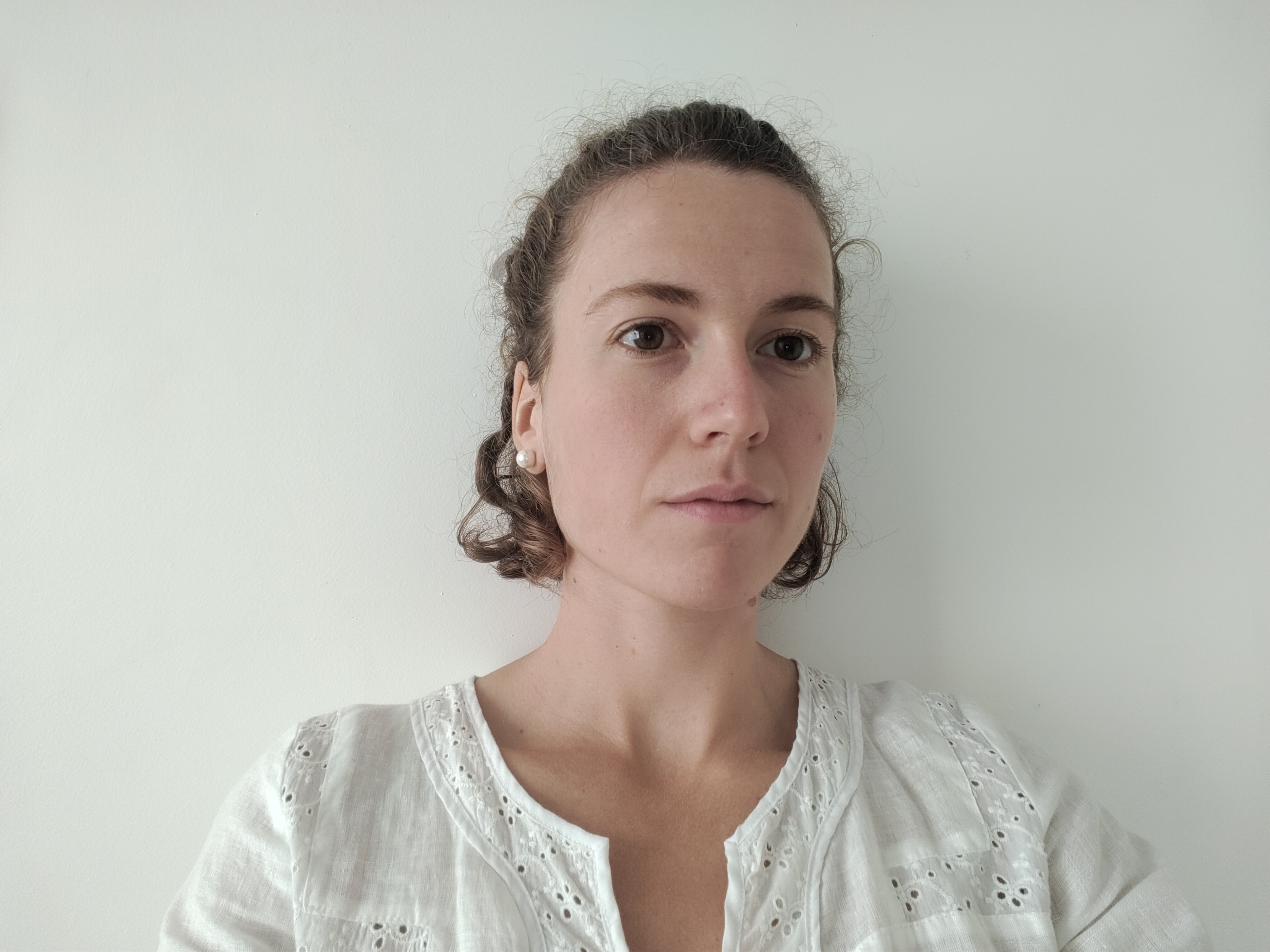
Léna JAHIER, PhD student on the IMAPP project
Who is she?
My Bachelor's degree in Psychology and my Master's degree in Research in Psychology at Université Grenoble Alpes helped me identify a field of study that particularly interests me: embodied cognition. This research field highlights the fact that our reasoning is not solely based on abstract, formal, and immutable rules, but results from the constant interaction between our body and its environment.
During my two-year Master's program, I conducted research under the supervision of Richard Palluel-Germain and Marcela Perrone-Bertolotti, with additional guidance from Mariam Bayram during the first year. This project aimed to examine the effect of kinesthetic motor imagery training on learning new words. Such training involves imagining oneself performing movements while focusing on the associated bodily sensations, particularly muscular and articular ones. The initial hypothesis was that this type of practice would pre-activate brain circuits related to motor skills, thereby facilitating their mobilization during subsequent lexical learning tasks. In this context, we conducted several experiments comparing the memory performance of a group that underwent motor imagery training with that of a control group.
This thesis aims to extend and broaden this work. Indeed, the results obtained so far have proven heterogeneous depending on the tasks and experiments. A first step will therefore be to improve the experimental design to more finely assess the existence of the expected effect, as well as the conditions favoring its emergence. Furthermore, we will apply this protocol to the context of teaching French as a second language to adults, in collaboration with Laura Abou Haidar and Catherine Carras from the Centre Universitaire d'Études Françaises (CUEF).
Cross-sectionally, this research will also include the development of a psycholinguistic database of sensorimotor norms. While comparable resources already exist in English and Italian, such an exhaustive database does not yet exist in French. However, numerous studies in embodied cognition emphasize the importance of controlling the degree of motor involvement of linguistic material in this type of work.
Through this thesis, my goal is to contribute to a better understanding of the relationship between motor skills and language, while developing practical tools for language learning and future research in this field.
Link to partner laboratories